What Does Nag Champa & Palo Santo Incense Smell Like?
This blend combines two distinctive fragrance styles.
Nag Champa contributes:
- sweet floral notes
- soft powderiness
- warm woody character
- gentle resinous depth
Palo Santo contributes:
- warm wood
- earthy sweetness
- light citrus character
- subtle pine-like freshness
- resinous warmth
Together they create a layered fragrance that balances the familiar sweetness of Nag Champa with a deeper woody character.
Nag Champa Incense
Nag Champa is one of the world's most recognisable incense fragrance styles.
It is generally associated with a rich blend of:
- sweet florals
- warm woods
- soft resins
- powdery notes
- gentle spice
Nag Champa incense has become particularly popular in meditation rooms, yoga spaces and spiritual settings.
Exact formulas vary between manufacturers, so unless Divine Soul provides an ingredient declaration, I would avoid attributing the fragrance to one particular flower, resin or traditional recipe.
Palo Santo Incense
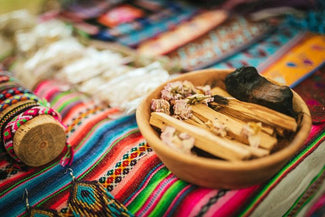
Palo Santo means “holy wood” in Spanish and is commonly associated with Bursera graveolens, a fragrant South American tree.
Its wood has cultural and spiritual significance in parts of Peru, Ecuador and neighbouring regions.
Contemporary Palo Santo fragrances are usually characterised by:
- woody warmth
- gentle sweetness
- resinous depth
- citrus-like brightness
- subtle pine notes
This incense is best described as a Palo Santo fragrance blend unless the manufacturer specifically confirms that actual Bursera graveolens material is included.
Nag Champa & Palo Santo Together
These two fragrance profiles work naturally together.
Nag Champa brings floral sweetness and a familiar meditative character, while Palo Santo adds warmth, woodiness and a brighter resinous edge.
The combination may appeal to anyone looking for:
- Nag Champa incense sticks
- Palo Santo incense sticks
- woody-floral incense
- meditation incense
- spiritual home fragrance
- rich but balanced incense blends
Cleansing Symbolism
Both Palo Santo and incense generally are commonly incorporated into contemporary spiritual practices centred on cleansing or preparing a space.
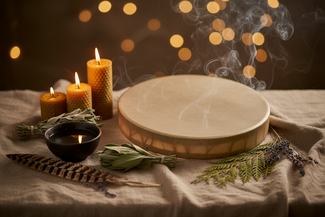
You might burn this blend while:
- preparing a meditation room
- beginning a personal ritual
- setting an intention
- journalling
- practising yoga
- creating a quieter atmosphere
Descriptions such as “cleansing negative energy” should be understood as spiritual or symbolic language rather than a scientifically measurable action of the incense.
Protection & Grounding Symbolism
Palo Santo is also frequently associated in modern metaphysical practice with protection, grounding and renewal.
Nag Champa is commonly used in spaces centred on meditation and contemplation.
Together, the fragrances can provide an atmospheric backdrop for practices involving personal boundaries, reflection or spiritual intention.
The incense should not be presented as providing guaranteed spiritual protection or physically changing an energy field.
Meditation & Spiritual Practice
The warm and layered aroma makes this blend particularly suitable for meditation.
It may be burned during:
- seated meditation
- mindful breathing
- prayer
- yoga
- journalling
- contemplation
- intention-setting
Fragrance can become a useful sensory cue within a regular practice, helping distinguish meditation time from the rest of the day.
That does not mean the incense itself causes concentration, calm or spiritual insight.
Palo Santo & Cultural Respect
Palo Santo has genuine cultural and spiritual associations in parts of South America.
Modern commercial descriptions sometimes generalise this history with broad statements about “ancient shamans” or universal cleansing traditions.
Practices surrounding Palo Santo vary by region and community, so it is more respectful to acknowledge its South American cultural context without assigning one universal ceremonial meaning to it.
A modern Indian incense blend should also not automatically be treated as equivalent to burning traditionally harvested Palo Santo wood.
Nag Champa in Modern Spiritual Spaces
Nag Champa has become strongly associated with meditation, yoga and alternative spiritual spaces around the world.
Its popularity today spans both spiritual use and simple home fragrance.
This means you do not need to practise within a particular spiritual tradition to enjoy the aroma.
It works equally well as:
- meditation incense
- evening home fragrance
- yoga-room incense
- ritual atmosphere
- general room fragrance
How to Burn Incense Sticks
Use a suitable incense holder on a stable, heat-resistant surface.
To burn:
- Place the uncoated end securely in the holder.
- Light the coated tip.
- Allow the flame to burn briefly.
- Gently blow out the flame.
- Check that the tip is glowing and releasing smoke.
- Allow the incense to smoulder naturally.
Make sure the holder safely catches falling ash.
Burn Time
Each stick is supplied as burning for approximately 30–40 minutes.
Actual burn time may vary depending on:
- airflow
- ventilation
- stick thickness
- room conditions
- individual manufacturing variation
Incense Safety
Always burn incense carefully.
- Use a stable, heat-resistant incense holder
- Keep away from curtains, paper and other flammable materials
- Burn in a well-ventilated area
- Never leave burning incense unattended
- Keep away from children and pets
- Avoid breathing smoke directly
- Extinguish fully after use
- Allow the holder to cool before touching
People who are pregnant, have asthma, respiratory conditions or fragrance sensitivities may wish to seek appropriate professional advice before using smoke-producing fragrance products.
Who Is This Incense For?
This blend may particularly suit someone looking for:
- Nag Champa incense
- Nag Champa incense sticks
- Palo Santo incense
- Palo Santo incense sticks
- meditation incense
- woody and floral incense
- spiritual home fragrance
- handmade Indian incense
Disclaimer
Descriptions relating to cleansing, protection, grounding, meditation or spiritual balance reflect traditional and contemporary symbolism and fragrance associations.
They should not be interpreted as medical, psychological or scientifically established effects.



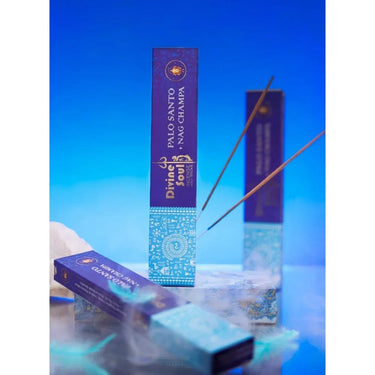

 Divine Soul Nag Champa & Palo Santo Incense Sticks 15g - Woody, Floral & Resinous Aroma
£1.75
/
Divine Soul Nag Champa & Palo Santo Incense Sticks 15g - Woody, Floral & Resinous Aroma
£1.75
/